
Mar. 4, 2013 — For hundreds of years, plant taxonomists have worked to understand how species are related. Until relatively recently, their only reliable source of information about these relationships was the plants’ morphology — traits that could be observed, measured, counted, categorized, and described visually. And paramount among these morphological traits were aspects of flower shape and arrangement.
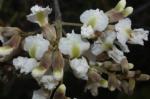 In the papilionoid legumes — a large, diverse group that includes the common pea and bean — most species have highly specialized, “butterfly-shaped” flowers with bilateral symmetry, fused stamens, and strongly differentiated standard, wing, and keel petals. Papilionoid genera with radially symmetric or weakly differentiated flower parts have been regarded as primitive members of the group. However, an international team of researchers have found that floral morphologies may be less reliable than other traits in determining the relationships of papilionoid species and genera. Their findings can be found in the recent issue of the American Journal of Botany. [ … continue reading ]
Source: http://www.sciencedaily.com/releases/2013/03/130304105533.htm
 Feb. 28, 2013 — New research has uncovered a mechanism that regulates the reproduction of plants, providing a possible tool for engineering higher yielding crops. In a study published today in Science, researchers from Monash University and collaborators in Japan and the US, identified for the first time a particular gene that regulates the transition between stages of the life cycle in land plants.







 Wilson County Master Gardener Association
You must be logged in to post a comment.