
On the only parcel of land original to 1820s Lebanon lies evidence of the spir-itual journey of the city. The land, shad-ed by towering hackberries, has borne witness to resilient faith, profound injus-tices, and healing reconciliation over two hundred years.

This storied land lies adjacent to Pickett Chapel, built in 1827 by slaves with bricks formed by their own hands. In 1827 it was known as Seay s Chapel and was later changed to Pickett Chapel. A block off Lebanon’s historic town square on Market Street — so named because it was the site of the largest slave auctions for miles around — men and women in bondage gathered under the trees outside the church to hear what they could of sermons preached inside. Later, congregations — white and black — gathered there to pray, to picnic, and to sing. In sight of the hackberries, civil rights activists teaching the tenets of non-violent protests were dragged from a prominent doctor’s office next door to the chapel and beaten by a vio-lent mob. Members of the then black congregation surrounded the chapel holding hands to protect it from being burned to the ground.
A site of archaeological significance to the state of Tennessee, artifacts from the 1820s through the more recent past lie under soil and tree roots. On the southwest corner of the proper-ty are the buried remains of a building believed to be contemporaneous with the chapel.
In her years-long effort to restore the historic building that had been her family’s home church, Mrs. Mary Harris and the Wilson County Black History Committee had a vision not only for the chapel, but for a garden. They imagined a garden dedicated to commemorating the individuals who were part of the history of the chapel and to the city’s journey over time toward peace and reconciliation. Late in 2023, the Executive Board of Wilson County Master Gardeners authorized a committee to explore creation of a garden on the site —The Pickett Chapel Heritage and Peace Garden.
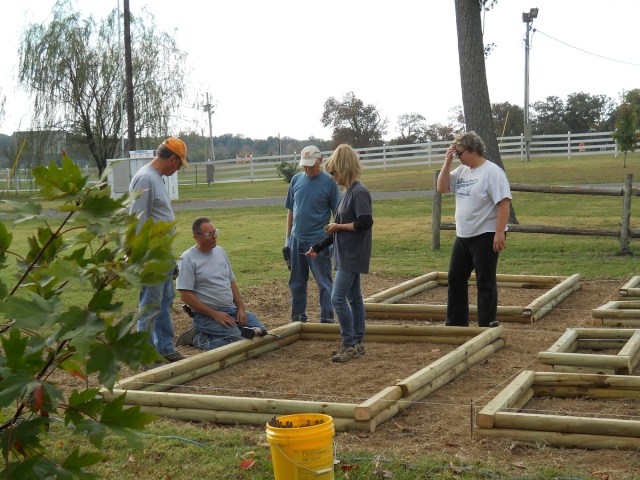
The committee (Rosemary Marshall, Maryann Hicks, Ed Jacobs, Mark and Marilyn Holysz, Tina Benson) first developed a design in response to the vision of Mrs. Harris and her board of directors The design was reviewed and approved by the Wilson County Black History Committee, the Tennessee Historical Commission and the state Archaeology Director with stipulations to preserve the integrity of the existing artifacts. Digging must be limited to the top 4 to 6 inches of ground. Locations of planting must be altered to respect parts of a buried structure on the southwest corner of the garden site. Care must be taken not to disturb an area dense with artifacts at the center of the northern edge of the property. Phil Hodge, a Lebanon native now heading Tennessee’s archaeological division, walked the site with the committee to help propose solutions. The garden will be developed with raised beds, a walkway in the shape of a cross built on the surface of the ground, and berms to allow planting without digging.
The garden will incorporate a donated fountain, church benches, and bricks engraved with the names of people beloved in the life of the congregation and important in the history of the chapel. The existing cross will be stabi-lized and moved out of the elements into the chapel itself and another, built from cedar, will be placed as the focal point of the garden walkway.
Before work could begin, three challenges had to be faced.
- The old hackberries had to be trimmed, and one, dam-aged beyond saving, had to be removed. An arborist estimated the cost of the work at $5,000. The committee’s budg-et at that time was $500. After a meeting with city mayor Rick Bell, the city completed the work and removed the debris without charge.
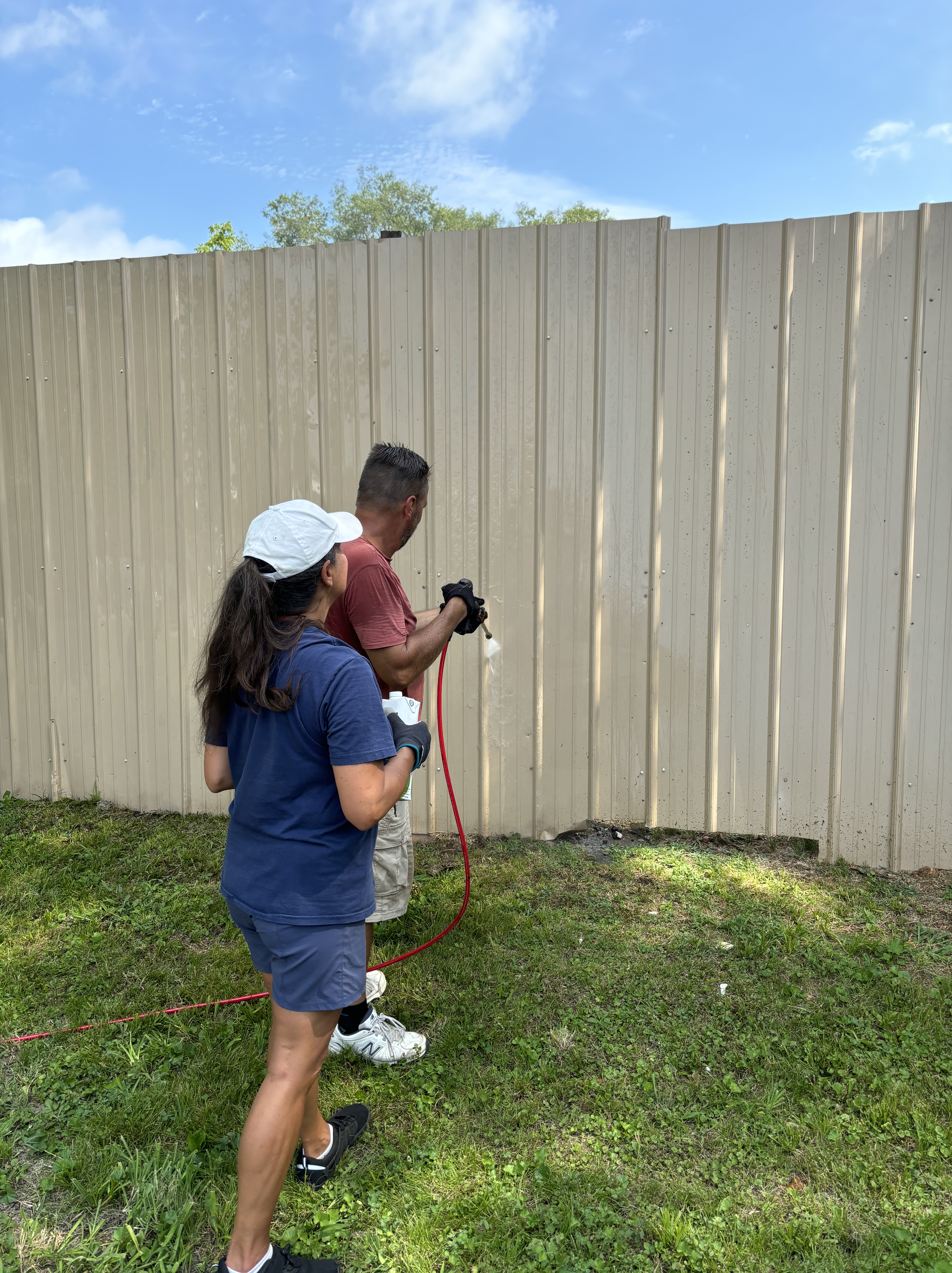
- A fence running the northern border of the proper-ty needed minor repairs and painting to incorporate it into the garden design. The owner of the fence readily gave his permission.
- The garden site had become a gathering place for people without shelter. Shoes, coats, shopping carts, and food containers were left. After talking with Meriah Anderson of Compassionate Hands and the city mayor, the committee asked police to conduct an assessment of the site for hazardous material. The site was cleared. Compassionate Hands announced plans for the garden and asked individuals to stop gathering there. The design committee posted the same request on the building. Plans are underway to invite unsheltered individuals to participate in creating the garden.
On the recommendation of the Wilson County Master Gardener’s Executive Board of Directors, the membership voted in June to make the Pickett Chapel Heritage and Peace Garden an official project of Wilson County Master Gardeners and to fund the red brick paver walkway that will be the central element of the garden. Following the vote, a request went to all members to participate in the project.
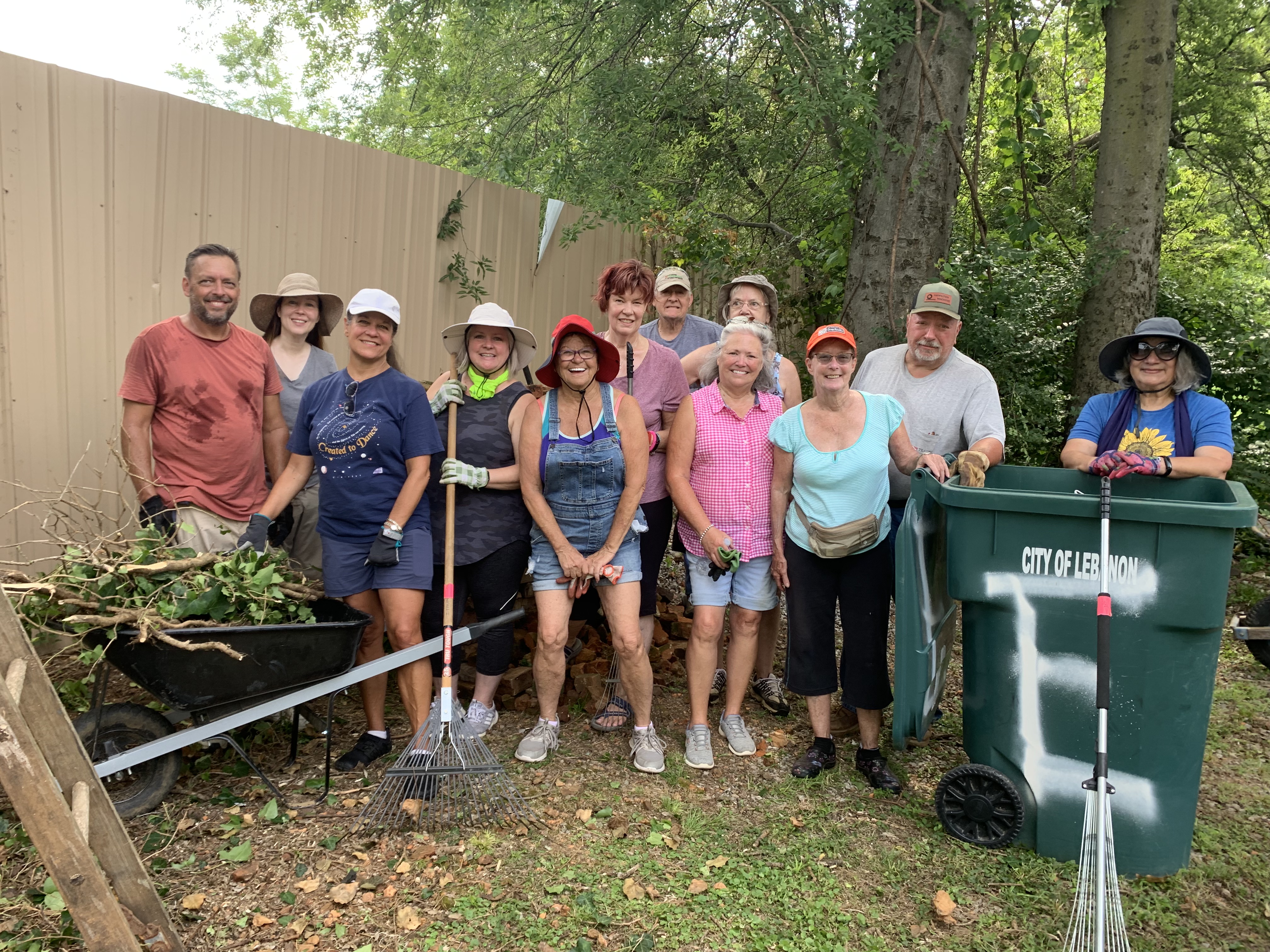
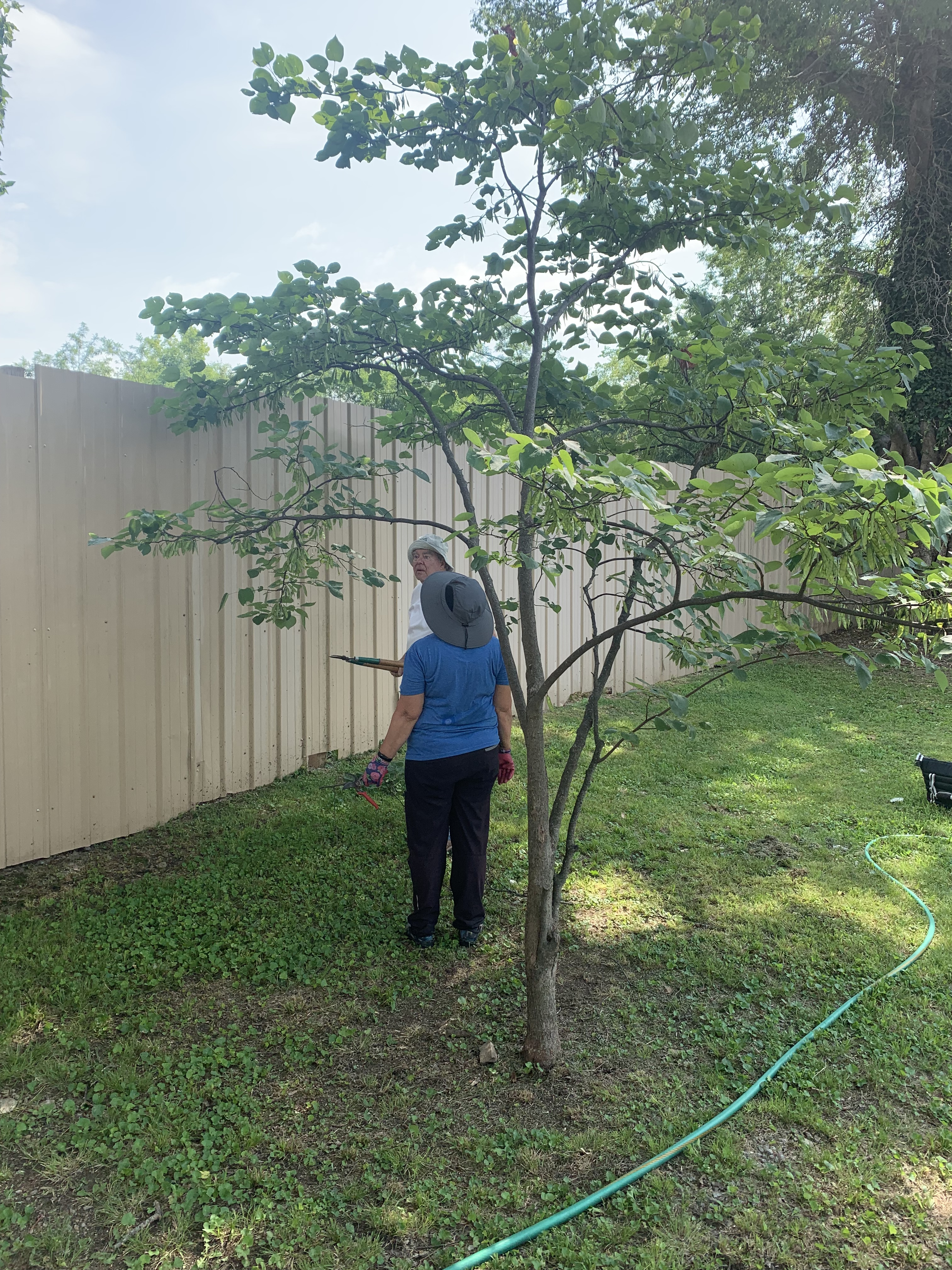
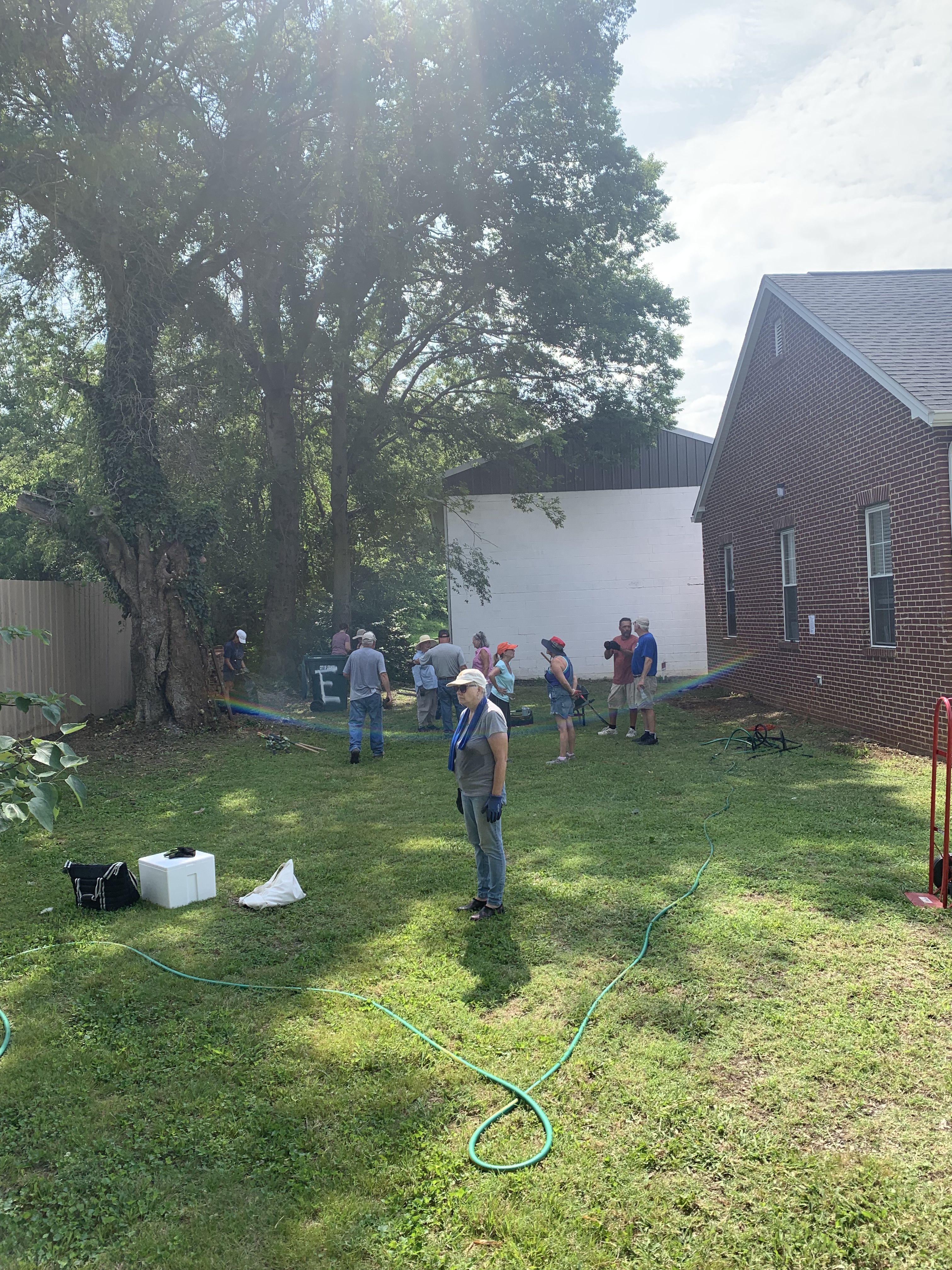
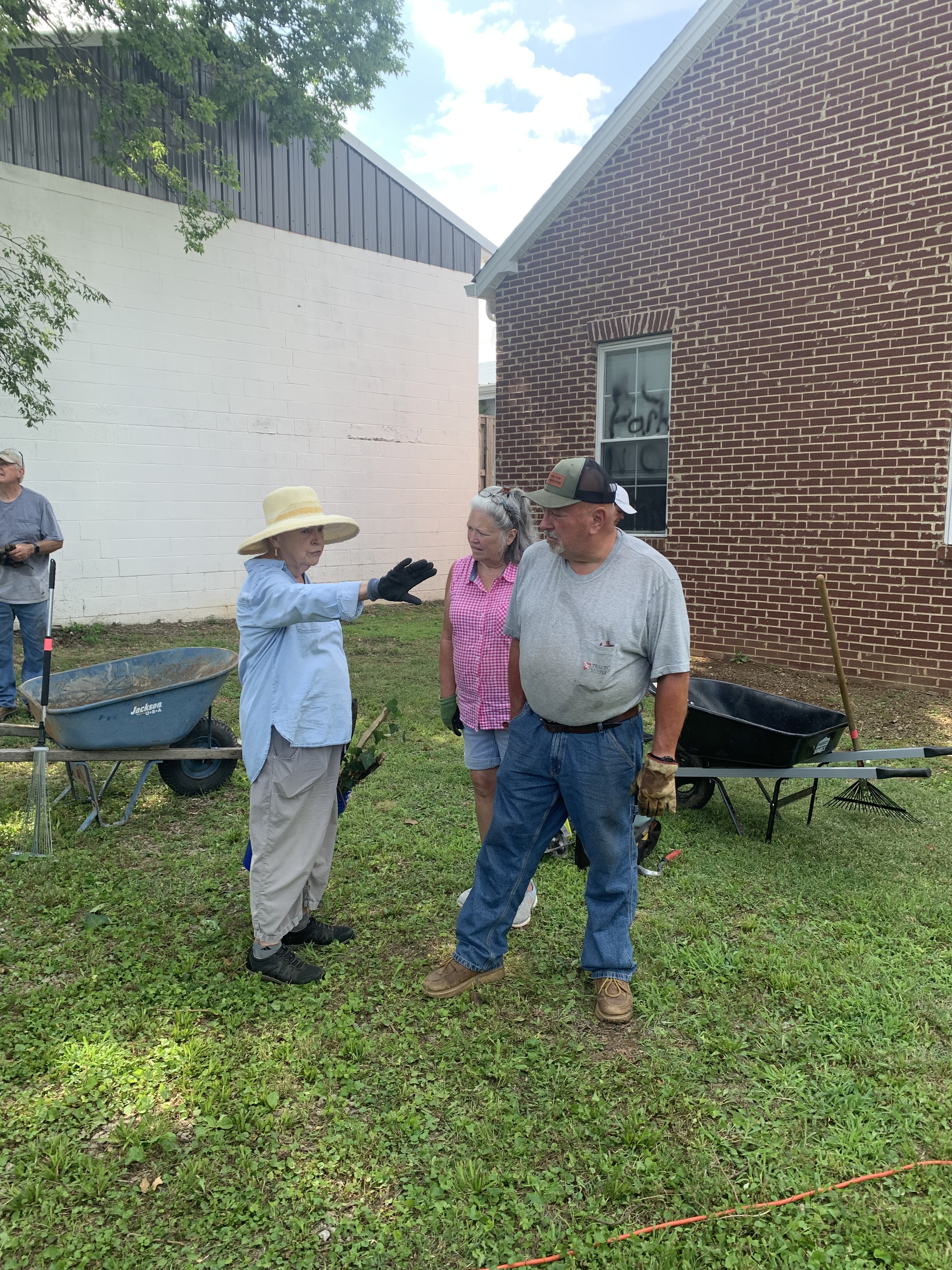
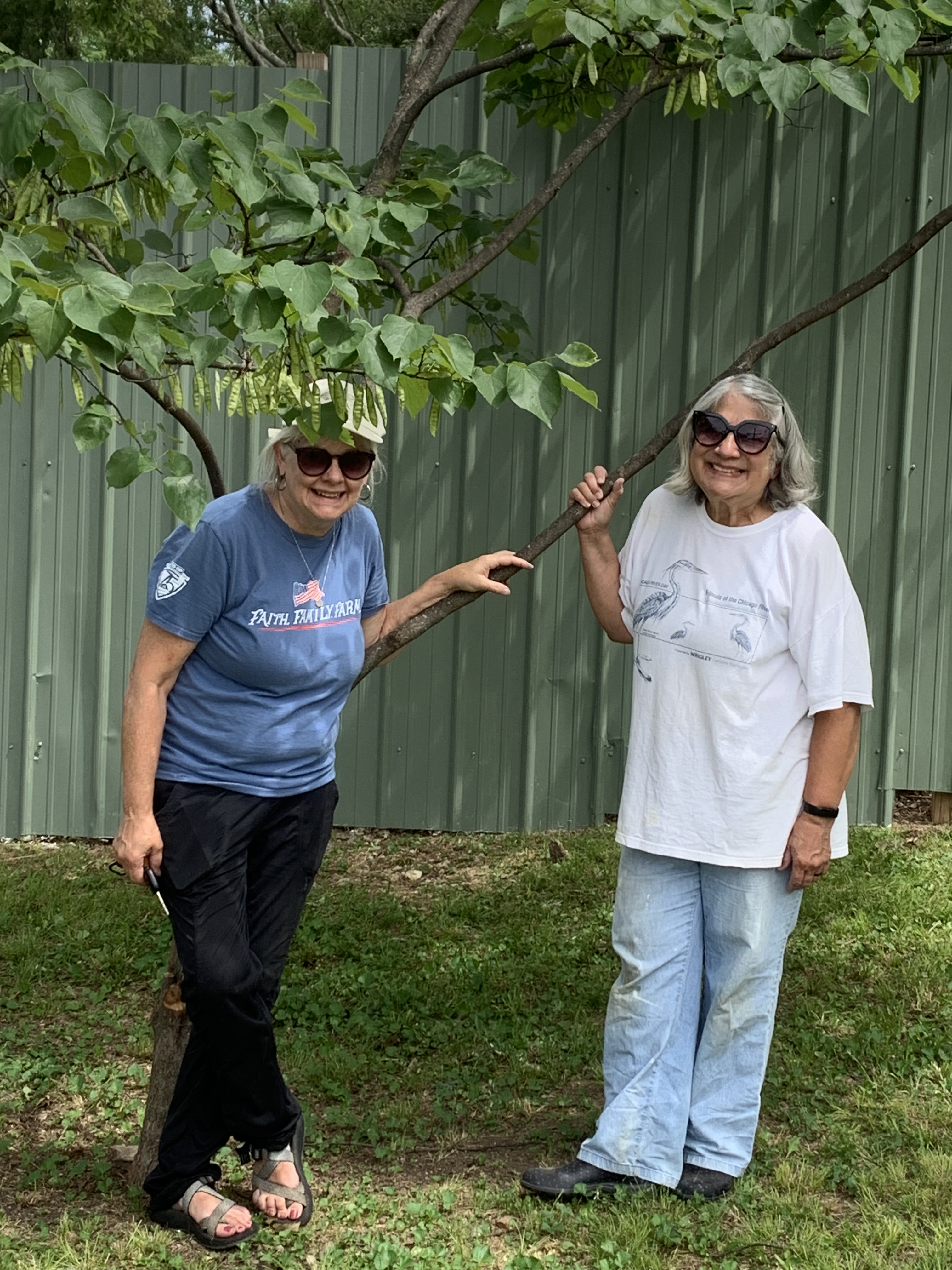
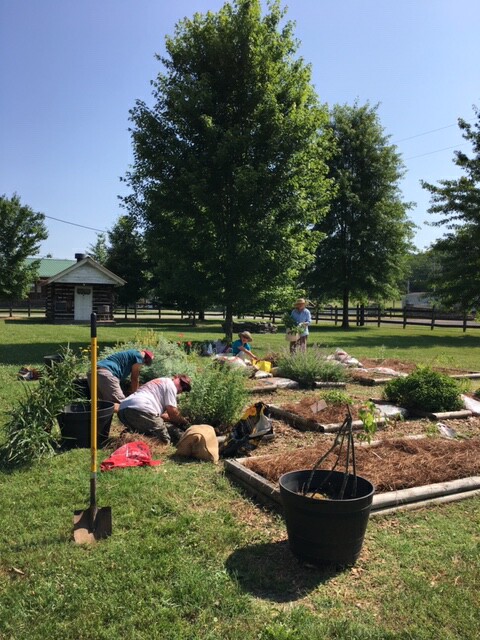
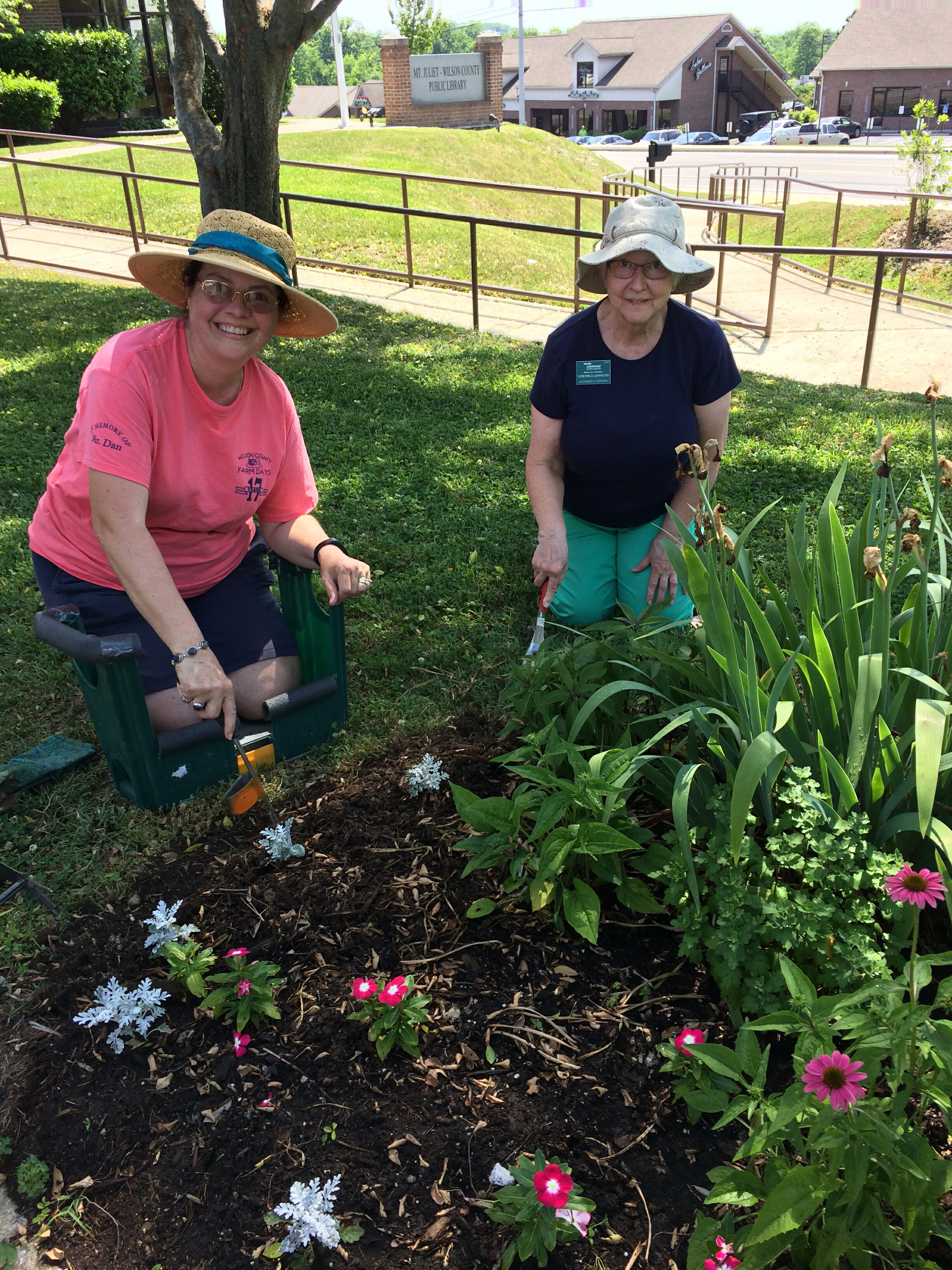
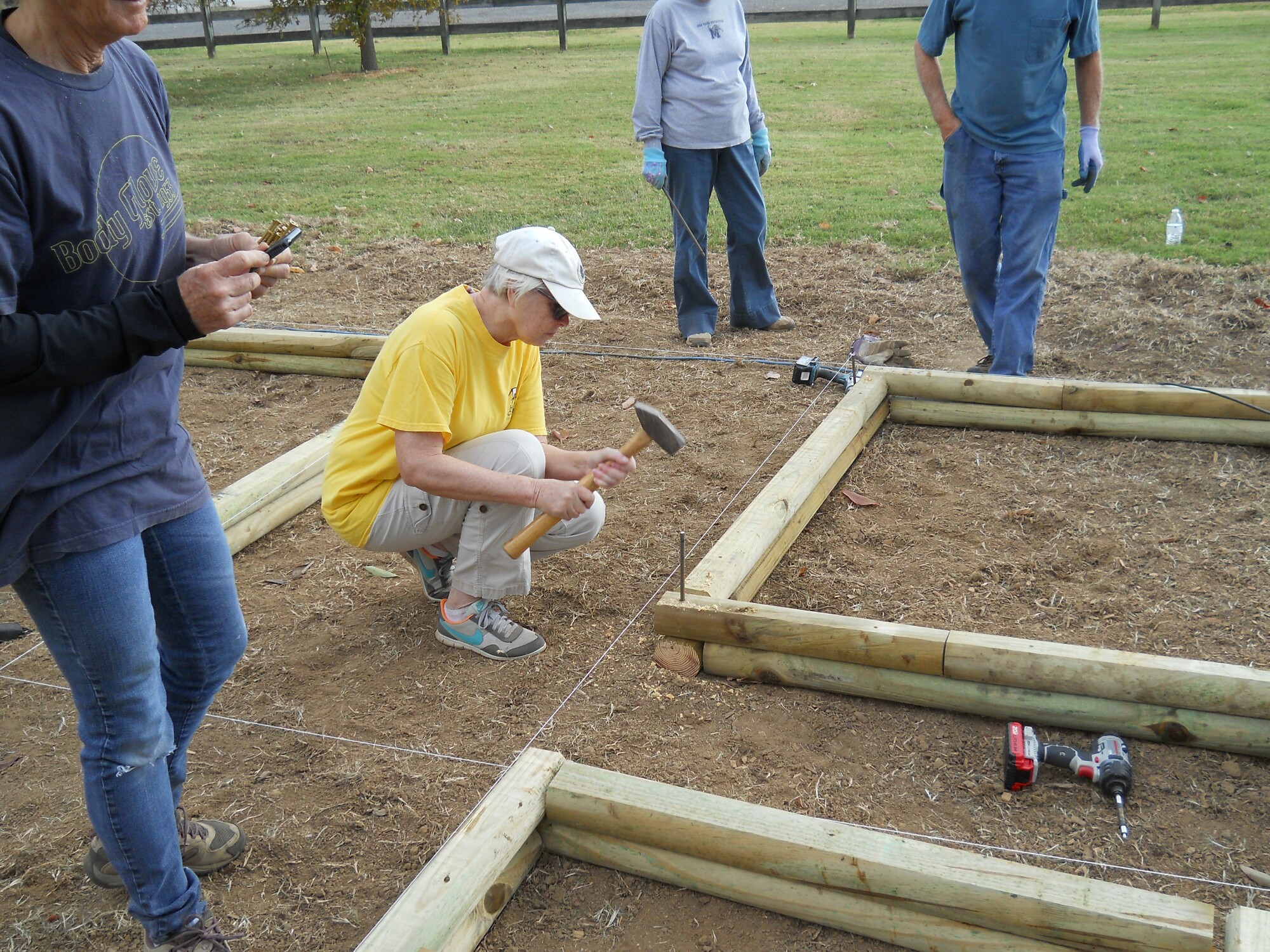
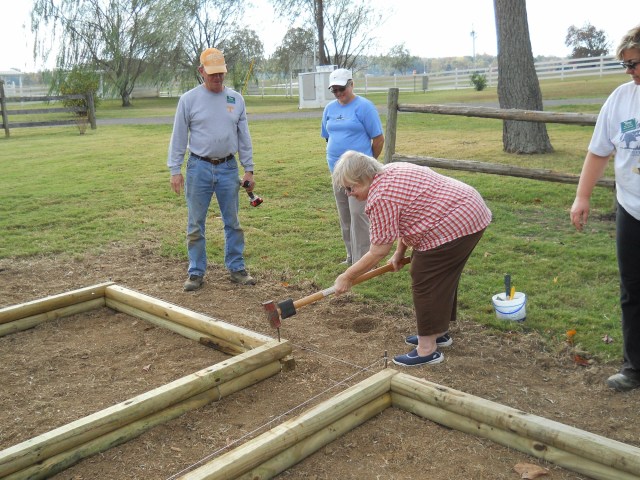
On one June morning, master gardeners removed debris from the site, dug and divided irises, cut old ivy from an aging hackberry, removed dead Leland cypress trees, relocated a stack of bricks, and power washed the fence. During the July 4th week, volunteers primed the fence and painted it a color called dried thyme. Brian Chomicki, who heads the Stormwater Division of the City of Lebanon, offered donations of soil, rock, and plants for the project as well as equipment and guidance on managing stormwater at the site. Srinivasulu Mudaragadda, a master gardener intern, has offered to donate materials. Many native plants were donated for the garden from those grown by MGWC for its annual Native Plant Sale. Redbuds from MGWC hosting of Tennessee Tree Day were saved for planting in the garden.
Development of the Pickett Chapel Heritage and Peace Garden presents Wilson County Master Gardeners opportunities for new partnerships — with the City of Lebanon and with the Wilson County Black History Committee. Just a block from the historic town square, the garden enables MGWC to be a visible part of the revitalization of downtown. And it creates a prime public space for education about native plants, about creating environmentally sustainable gardens, and about the value of gardens in promoting community. Halfway between the two congregations that grew out of Pickett Chapel — Pickett Rucker United Methodist Church and Lebanon First United Methodist Church — the garden will offer to the citizens of the city a gathering place, a place of beauty, a place for celebration. And with the restoration of the chapel as a museum and the planting of the garden, a new destination for visitors to the city will arise.












 Wilson County Master Gardener Association
You must be logged in to post a comment.