Blooming In The Glades

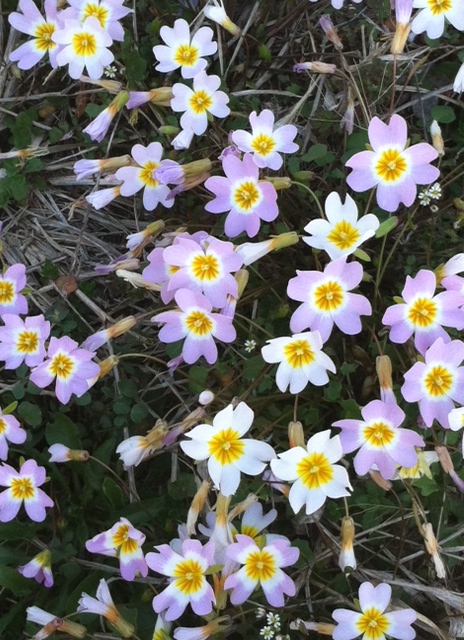
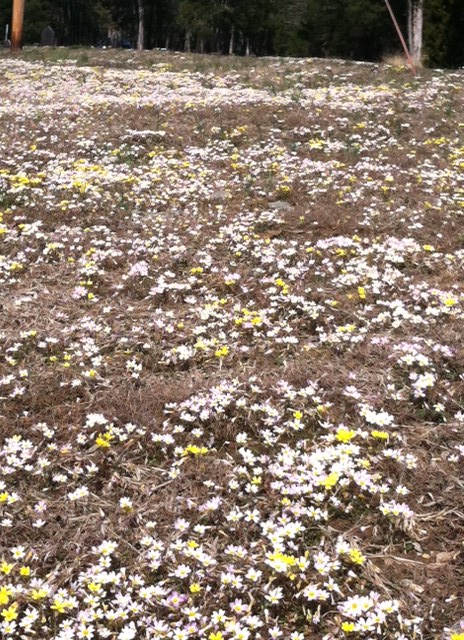
Thank you Linda Robertson for the close-up photos of Leavenworthia Stylosa. This early bloomer is said to grow only in Tennessee’s Central Basin. It belongs to the mustard family and is commonly known as Cedar Glade Cress or occasionally Nashville Mustard. It grows in cedar glades, ditches, and low-lying fields (lawns).

L. stylosa typically blooms from March to May. The flowers are about 1 inch wide and are white, yellow or pink in color with a yellow center. The tips of the petals are notched. Yellow varieties are found more commonly in the northern half of the Central Basin while the white and pink varieties are found more commonly in the southern half.

In the Glades - 20 March 2013

Nashville Mustard growing in the Glades – 20 March 2013

.

Leavenworthia Stylosa In the Glades - 20 March 2013

Leavenworthia Stylosa In the Glades – 20 March 2013

.

Cedar Glade Cress blooms in a field - 20 March 2013

Cedar Glade Cress blooms in a field – 20 March 2013

.

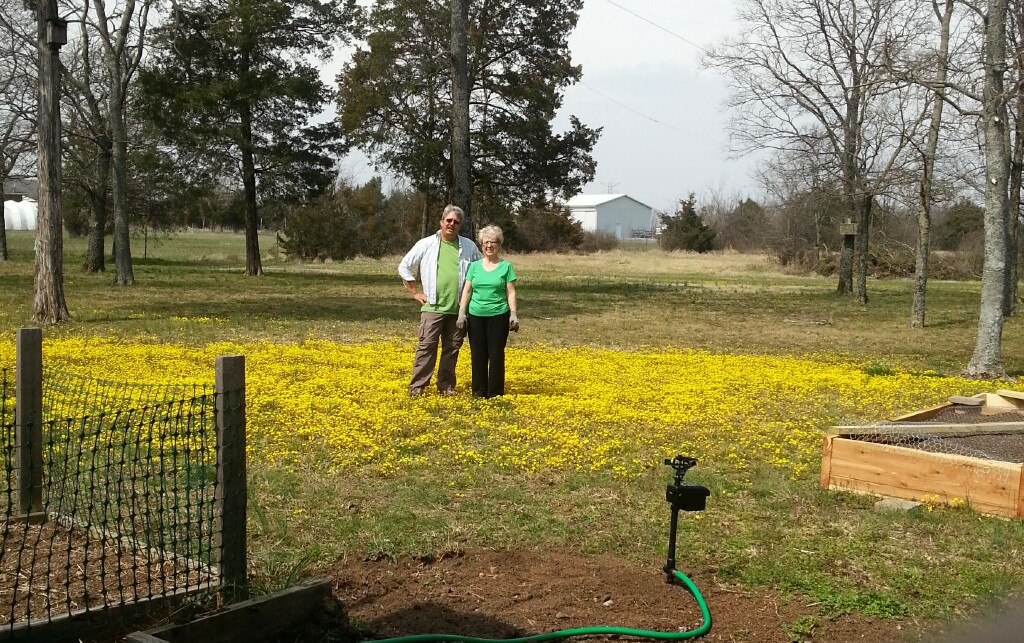
And here are some photos of my yard this spring. The first one was taken St. Patrick’s Day, and the second one on Friday, 22 March, but this stuff has been in bloom since early February. My bees wear it out, and the henbit too, when nothing else is available.

ls20130317_132749_2

.

ls20130322_092009_2

.
wcmg

Posted in Photos | Comments Off on Blooming In The Glades

Tree Planting Day in Lebanon – Friday March 8

On March 8 and 9 Tennessee Environmental Council along with several member groups, partners and sponsors will plant 10,000 trees and we need YOUR help!  Planting a tree is a simple act with TREEmendous benefits.  Trees have a myriad of benefits – too many to list them all – but here are a few surprising and important facts:

  • Communities with more trees have less crime and graffiti.
  • Communities with more trees have less asthma and lung disease.
  • Homes with a mature tree in the yard may be worth up to 10% more than a similar home without a mature tree.
  • One tree can provide $130,750 in total benefits over 50 years including oxygen, air pollution control and reducing flooding.

We will plant trees during the day on March 8 (and on March 9) at several locations throughout Tennessee (listed below).    Volunteers will learn to plant trees through hands-on activity and will receive free Council Membership and free T-shirts while supplies last (while supplies last – limit one per volunteer).   Participation is free but REGISTRATION IS REQUIRED so we can let you know of any changes on or before the event day.  If you have questions about this event, please email us at tec(at symbol)tectn.org with the subject line “10K Tree Day”.

Tree Planting Locations – 8 March from 9am-2:30pm

Lebanon, TN
Location:   Winfree Bryant Middle School, 1213 Leeville Pike, Lebanon, TN
Details:   Students will be planting trees on-site.  We are looking for adult volunteers to assist with digging and other logistics.

Important info for Volunteers:  Please bring shovels, gloves, workboots, and a bottle of drinking water.  If you have waders we may need those for.   The 10K Tree Planting Day will happen rain or shine, dress appropriately.  Rain gear and sturdy shoes or boots are strongly recommended.  We may reschedule for SEVERE weather conditions including lightening, or other severe conditions.  Rescheduling will occur  on the morning of the event – call 615-248-6500 for updates.    Registration is required so we can notify you of any changes and process your Council membership.   Click link above to register.  A volunteer waiver is required for all volunteers.  Please complete waiver found here:

http://tectn.org/event/10ktreeday-march8/

.
wcmg

Posted in Announcement, Volunteer Opportunity | Comments Off on Tree Planting Day in Lebanon – Friday March 8

Don’t Be Fooled: Flowers Mislead Traditional Taxonomy

Mar. 4, 2013 — For hundreds of years, plant taxonomists have worked to understand how species are related. Until relatively recently, their only reliable source of information about these relationships was the plants’ morphology — traits that could be observed, measured, counted, categorized, and described visually. And paramount among these morphological traits were aspects of flower shape and arrangement.

luetzelburgia_bahiensisIn the papilionoid legumes — a large, diverse group that includes the common pea and bean — most species have highly specialized, “butterfly-shaped” flowers with bilateral symmetry, fused stamens, and strongly differentiated standard, wing, and keel petals. Papilionoid genera with radially symmetric or weakly differentiated flower parts have been regarded as primitive members of the group. However, an international team of researchers have found that floral morphologies may be less reliable than other traits in determining the relationships of papilionoid species and genera. Their findings can be found in the recent issue of the American Journal of Botany. [ … continue reading ]

Source:  http://www.sciencedaily.com/releases/2013/03/130304105533.htm

Posted in Science | Comments Off on Don’t Be Fooled: Flowers Mislead Traditional Taxonomy

New Insights Into Plant Evolution

130301123314Feb. 28, 2013 — New research has uncovered a mechanism that regulates the reproduction of plants, providing a possible tool for engineering higher yielding crops. In a study published today in Science, researchers from Monash University and collaborators in Japan and the US, identified for the first time a particular gene that regulates the transition between stages of the life cycle in land plants.
Professor John Bowman, of the Monash School of Biological Sciences said plants, in contrast to animals, take different forms in alternating generations — one with one set of genes and one with two sets.

“In animals, the bodies we think of are our diploid bodies — where each cell has two sets of DNA. The haploid phase of our life cycle consists of only eggs if we are female and sperm if we are male. In contrast, plants have large complex bodies in both haploid and diploid generations,” Professor Bowman said.

These two plant bodies often have such different characteristics that until the mid-1800s, when better microscopes allowed further research, they were sometimes thought to be separate species. [ … Continue reading ]

Source: http://www.sciencedaily.com/releases/2013/03/130301123314.htm

Posted in Science | Comments Off on New Insights Into Plant Evolution

A promising fruit: The tree tomato.

Posted on by Greg | Comments Off on A promising fruit: The tree tomato